
"000 bags"
2000 article(s) found
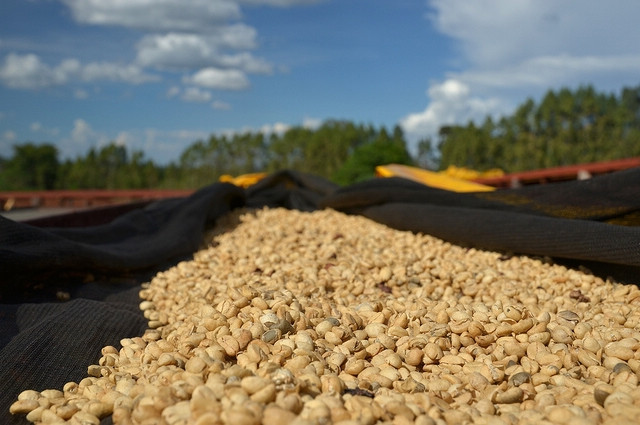
Royal Coffee processing Plant in St. Roman, a country grown in Central America, Tarazu, Costa Rica.
Costa Rican coffee cultivation was introduced by Cuba in 1779 and exported for the first time in 1820. There are about 32000 coffee farmers, with an average planting area of less than one hectare (10000 hectares) per farmer. Costa Rica has a population of 41 billion (2006), with a coffee planting area of 82500 hectares and an annual production of 1.7 million bags (60kgs per bag). The annual domestic consumption is 380000 bags.

100,000 yuan coffee shop investment success case
Dream Traveler is only more than 30 square meters, fifteen or sixteen seats, daily business hours from 2:00 p.m. to 12:00 p.m., 3:00 p.m. and 9:00 p.m. after the peak business, all full. Among the guests, there are many artists, students from Beijing TV Station and surrounding colleges, and friends who recommend them. Financial statements 8 months back To start your own business, you have to first

What kind of equipment does it take to open a boutique coffee shop? How to go through all kinds of formalities?
Professional barista communication Please pay attention to the coffee workshop (Wechat official account cafe_style) boutique coffee shop needs what equipment? Essential items for opening shop (professional shop) semi-automatic coffee machine, bean grinder, all kinds of hand cups, all kinds of filter paper, ear bags, paper bags, water softeners, water purifiers, powder boxes, powder hammers, flower jars, powder mats, ice makers, electric ovens

Introduction of the main coffee bean producing areas in Honduras Santa Barara Manor San Juan Heido
Its Honduran coffee comes from El Salvador. Coffee production was lukewarm at first until the frost in Brazil in 1975. At that time, Brazil was hard hit and coffee production plummeted, while Honduras took the opportunity to take advantage of the surge in coffee production from 500000 bags to 1.8 million bags and was ransacked. Since then, coffee production in Honduras has really developed.

The taste of balanced San Barra estate boutique coffee beans varieties planted market price profile
Honduras is a mountainous country in Central and North America with a population of more than 8.3 million and an area of about 112,000 square kilometers. Located in northern Central America. It is bordered by the Caribbean Sea to the north, the Gulf of Fonseca in the Pacific Ocean to the south, Nicaragua and El Salvador to the east and south, and Guatemala to the west. More than three-quarters of the territory is mountainous and plateau. Mountains extend from west to east, inland for lava plateau, mountainous

McDonald's coffee scald case actually compensated for more than 400,000 US dollars-third-degree scald "area accounts for the whole body skin"
At that time, the old lady sat in the passenger seat in the front seat, parked the cup between her knees, held a bag of milk powder and sugar in her left hand, and tried to open the lid in her right hand. Unexpectedly, an unexpected mistake, a whole cup of scalding coffee was spilled between her legs, resulting in serious burns on the inner thigh, groin, vulva and front buttocks, including third-degree burns accounting for 6% of the whole body's skin. In medical terminology
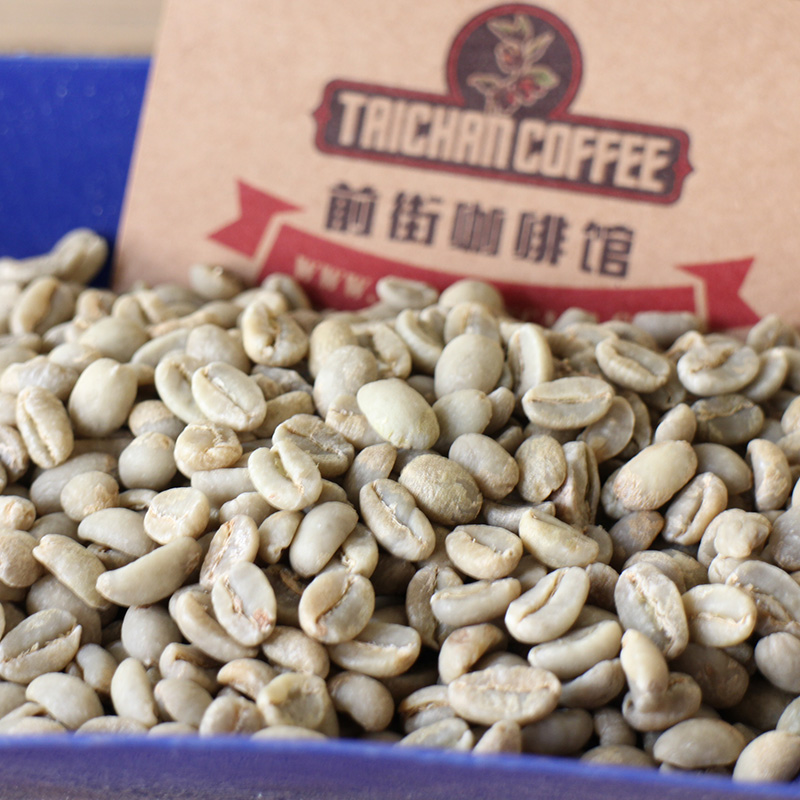
Raw Bean Price Costa Rica Tara Pearl Diamond Hill Manor Wash SHB Kadura Fine Coffee Raw
Coffee cultivation in Costa Rica was introduced from Cuba in 1779 and exported for the first time in 1820. There are about 32,000 coffee farmers in Costa Rica, with an average cultivation area of less than one hectare (10,000 m2) per farmer. Costa Rica has a population of 4.1 million (2006), 82,500 hectares of coffee cultivation, an annual production of 1.7 million bags (60kgs per bag), and an annual domestic consumption of 380,000 bags.

Introduction to the flavor and taste of Ethiopian coffee beans grade classification of Ethiopian Sidamo coffee beans
Ethiopia has unique natural conditions suitable for growing all imaginable varieties of coffee. As a upland crop, Ethiopian coffee beans are mainly grown in areas between 1100 and 2300 meters above sea level, roughly distributed in southern Ethiopia. Deep soil, row

Tarazhu Cooperative's loud and long sour Costa Rican coffee
Professional coffee knowledge exchange more coffee bean information please follow the coffee workshop (Wechat official account cafe_style) Costa Rica Coffee cultivation was introduced from Cuba in 1779, only the first export of coffee in 1820, there are about 32000 coffee farmers, the average planting area per farmer is less than one hectare (10000 tons). Costa Rica has a population of 41 billion.

Hong Kong R & D brewing machine for tea marketing Chinese cold-pressed fruit juice machine British Harrods department store
Exchange of professional baristas Please follow the Coffee Factory (official Wechat account cafe_style) Coffee brewers have become very popular in recent years and have become dominated by foreign brands, making it difficult for new companies to compete. Some start-ups in Hong Kong have developed intelligent brewing machines to make coffee, and they can also brew western-style flower and fruit tea and traditional Chinese tea, which have successfully sold 40, 000 units in mainland China. After that, he took advantage of the small cold pressure at home.

Taste characteristics of fermented natural sun-cured Ethiopian coffee varieties introduction to the flavor of fine coffee beans in the manor
Ethiopia has unique natural conditions suitable for growing all imaginable varieties of coffee. As a upland crop, Ethiopian coffee beans are mainly grown in areas between 1100 and 2300 meters above sea level, roughly distributed in southern Ethiopia. Deep soil, well drained soil, weakly acidic soil, laterite and soil are soft and contain

Vietnamese coffee beans vinacafe Zhongyuan G7 coffee
Vietnamese coffee Vietnamese coffee, aroma is stronger, sour is lighter, taste smooth and moist, mellow slightly bitter, aromatic rich, refreshing, representative products are Central Plains coffee and highland coffee. Product Description Using a modified Vietnamese pot, the coffee beans are extracted in a drip style. And the biggest feature of Vietnamese coffee beans is that they are roasted with special cream, so they will have a strong flavor.

Vietnamese coffee Vietnamese coffee beans Vietnamese Didi coffee pot
Vietnamese coffee, strong flavor, sour taste, smooth and moist taste, mellow slightly bitter, rich aroma, refreshing, representative products are Central Plains Coffee and Highland Coffee. A modified Vietnamese pot is used to extract pure Vietnamese coffee beans by dripping. And the most important feature of Vietnamese coffee beans is baked with special cream, so it will be rich.

Development of Coffee production and processing in Vietnam Central Plains Coffee Highland Coffee Moche Coffee
Vietnamese coffee (c ph, literally iced coffee) is a kind of dripping coffee. The aroma is strong, the sour taste is light, the taste is smooth and moist, the fragrance is slightly bitter, the aroma is rich, refreshing and refreshing. Representative products are moossy Coffee, Central Plains Coffee, Saigon Coffee (SAGOCAFE), Highland Coffee. The geographical location of Vietnam is very favorable for coffee cultivation.

Due to the shortage of containers, Vietnamese coffee exports fell by 17.6% in January compared with the same period last year.
For more information on coffee beans, please follow the coffee workshop (Wechat official account cafe_style) Vietnam is the world's largest producer of Robbosa beans. Vietnam's coffee exports fell 17.6 percent in January from a year earlier to 120000 tons, equivalent to 2 million bags (60 kilograms per bag), according to the General Administration of Statistics (GSO) on January 29. It is estimated that this month, Robes, Vietnam

Nestle latest news: Nestle production label non-compliance fined 86,000 yuan Nestle most products are unhealthy
Food production date is related to food safety. For safety reasons, consumers often pay attention to important information such as production date and shelf life when purchasing food. According to several media reports, Nestle was fined 86,000 yuan for producing non-compliant food labels. According to the website of Shanghai City Market Supervision Bureau, Shanghai Nestle Product Service

Costa Rican Coffee House-Diamond Hill Coffee House Costa Rican Coffee House
Costa Rican coffee cultivation was introduced from Cuba in 1779 and exported for the first time in 1820. There are about 32,000 coffee farmers in Costa Rica, with an average cultivation area of less than one hectare (10,000 m2) per farmer. Costa Rica has a population of 4.1 million (2006), coffee cultivation area of 82,500 hectares, annual production of 1.7 million bags (60kgs per bag), annual domestic consumption of 380,000 bags, flat

Description of Flavor of Coffee beans in Jinchu Valley of Kenya introduction to the planting environment of grinding scale varieties
There are two types of coffee farms in Kenya, one is a large planting farm covering an area of more than five acres, but the average elevation is low, as far as Kenyan coffee is concerned, the quality of coffee beans in the big farm is only medium. The best Kenyan beans come from small farms, most of which are above 5,000 to 6,000 feet.
The price of coffee and beans in China showed an upward trend in 2014.
Affected by extreme weather, the global supply and demand of coffee beans, the raw material of coffee, has been challenged this year. Multi-party data show that due to the main producing areas of coffee beans, such as Brazil, affected by drought, diseases and insect pests and other factors, coffee bean production has dropped sharply this year, resulting in coffee beans in short supply and prices showing an upward trend. At present, it has also entered the picking season of domestic coffee beans. Yesterday (November 25), coffee in Yunnan Province

Description of Flavor of Coffee beans in Jinchu Valley, Kenya A brief introduction to the planting environment of grinding scale varieties
There are two types of coffee farms in Kenya, one is a large planting farm covering an area of more than five acres, but the average elevation is low, as far as Kenyan coffee is concerned, the quality of coffee beans in the big farm is only medium. The best Kenyan beans come from small farms, most of which are located at 5,000 to 6,000 feet.